
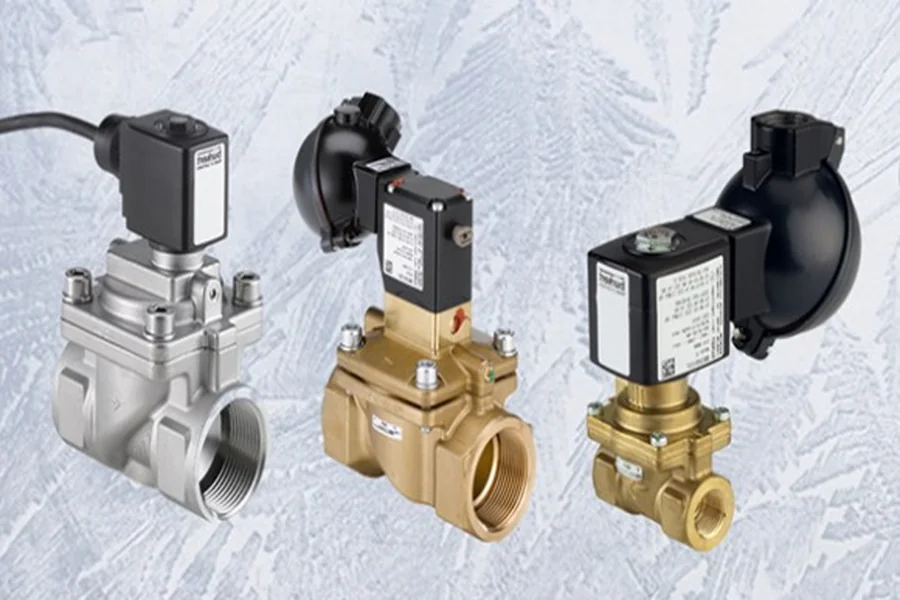
What Is a Solenoid Valve for Water?
At its core, a solenoid valve is an electromechanical device that controls the flow of water using an electric current. When voltage is applied to the coil, it creates a magnetic field that pulls a plunger, opening or closing the valve seat. This movement either starts or stops water flow — instantly and precisely.
Unlike manual valves that require someone to twist a handle, solenoid valves do the job automatically. In automation systems and plumbing setups where remote or timed control is needed, solenoids make life easier. I’ve used them in everything from home water filters to industrial clean-in-place (CIP) systems.
Why use them? Solenoid valves are compact, reliable, fast-switching, and easy to wire into control systems. For applications like irrigation, leak detection, tank refills, and zone-based HVAC systems, they’re often the best choice.
What Are the Main Types of Water Solenoid Valves?
Understanding the different types of water solenoids is key to choosing the right one for your system. Below are the four main ways we categorize them:
Direct-Acting Solenoid Valves
How they work:
These valves open or close directly via the electromagnetic force generated in the coil — no pilot flow required. The plunger lifts or drops right against system pressure.
Best for:
- Low-pressure systems
- Small diameter pipes
- Applications requiring fast response or where flow must start even at zero pressure
Where I use them:
I often spec direct-acting valves in countertop water purifiers, lab dosing units, and medical dispensers. They’re reliable when flow is low and precision matters.
Pilot-Operated Solenoid Valves
How they work:
These use a small pilot port to control the pressure difference across a diaphragm or piston, amplifying force from the coil to control larger flow paths. They need a minimum pressure differential to operate.
Best for:
- High-flow water systems
- Larger pipe diameters (1” and up)
- Applications with steady upstream pressure
Where I use them:
Common in irrigation systems, water tanks, and HVAC systems. I’ve used them to switch 2” water lines for rooftop chillers — the pilot mechanism makes them efficient even with limited coil power.
Normally Open vs. Normally Closed
What’s the difference?
- Normally Closed (NC): Valve is shut without power. Opens when energized.
- Normally Open (NO): Valve stays open when not powered. Closes when energized.
Why it matters:
- NC is safer for emergency shutdowns — if power is lost, flow stops.
- NO can save energy in systems where flow should always happen unless there’s a need to stop it briefly.
Use-case comparison:
| Use Case | Recommended Type |
| Emergency stop for leak control | Normally Closed |
| Always-open valve with rare shutdown | Normally Open |
| Gravity-fed tank fill | Normally Closed |
| Drain control with low voltage | Normally Open |
I’ve used NC valves for chemical lines where safety is a must, and NO valves in condensate drains to reduce energy draw.
How to Choose the Right Water Solenoid Valve
Selecting the right solenoid valve for a water system isn’t just about pipe size or voltage — it’s about system safety, reliability, and long-term compatibility. I’ve helped spec solenoids for everything from irrigation controllers to sterile water dispensing in medical labs. Here’s the step-by-step process I recommend every time:
Step 1: Know Your Media
Start with the fluid. Even within “water,” there are big differences:
- Clean cold water → Most general-purpose valves are fine.
- Hot water or steam → You’ll need high-temp seals (e.g. FKM) and heat-rated coils.
- Dirty water / sediment → Go for valves with larger orifices or filter screens.
- Water + chemicals → Ensure internal parts (seals, body) are chemical compatible.
🛠 Tip: Don’t assume “water” is just water. I’ve seen EPDM seals fail fast in high-chlorine rinse tanks.
Step 2: Define Pressure and Flow Range
Every solenoid valve has a working pressure range (minimum and maximum), plus a flow capacity rated in Cv or L/min.
- Low-pressure systems (e.g. gravity tanks) → Choose direct-acting valves.
- High-flow or pressurized systems → Use pilot-operated types.
If pressure is borderline or variable, err on the safe side with direct-acting models.
Step 3: Pick Your Voltage and Switching Speed
Solenoid valves are typically available in:
- 12V DC / 24V DC – Safe for mobile or battery systems
- 24V AC / 110V AC / 220V AC – For building or industrial mains
Also consider:
- Switching speed: Some valves actuate in milliseconds (ideal for dosing); others take over a second (OK for HVAC zone valves).
Step 4: Decide on Normally Open (NO) or Normally Closed (NC)
This affects what happens if the system loses power.
| Application | Recommended Logic |
| Emergency shutoff, leak control | Normally Closed |
| Always-on flows (drains, loops) | Normally Open |
| Timer-based irrigation or refill | Normally Closed |
Rule of thumb: If failure = risk, go NC. If power loss = stuck closed is worse, go NO.
Step 5: Match Pipe Size and Thread Standard
You’ll typically find:
- 1/4”, 3/8”, 1/2”, 3/4”, 1”, 1.5”, 2” ports
- Thread types: BSP (Europe), NPT (US)
Double-check thread compatibility and adapter availability before buying — I’ve seen projects delayed over a simple thread mismatch.
Step 6: Check Valve Materials and Seal Compatibility
| Component | Options | Notes |
| Valve body | Brass, Stainless, Nylon | Brass is common, stainless for aggressive media |
| Seals | EPDM, FKM (Viton), PTFE | Match to fluid temperature and chemical type |
| Internals | Stainless, plastic | Depends on application and durability needs |
Step 7: Confirm Certifications (If Required)
- NSF / WRAS / FDA → Needed for drinking water or food-grade use.
- CE / UL / CSA → For electrical safety compliance.
If you’re working in regulated industries, this step is non-negotiable.
Where Are Water Solenoid Valves Used?
As someone who’s installed water solenoids in everything from greenhouses to commercial kitchens, I can confidently say: these valves show up anywhere precise, reliable water control is needed. Below are the most common industries and use cases I’ve worked with.
Irrigation and Agriculture
Solenoid valves are the backbone of automated irrigation systems:
- Sprinkler zones: Open/close individual lines based on timers or sensors
- Drip systems: Control flow to specific crops or beds
- Greenhouse misting: Precise humidity control with minimal manual intervention
They’re preferred here because they switch fast, are easy to automate, and can handle both clean and sediment-laden water.
HVAC Systems
In heating, ventilation, and cooling setups, water solenoids are used for:
- Chilled water loops: Open/close water circuits for cooling air
- Humidifiers: Control steam or water spray
- Condenser units: Regulate water flow to cooling towers or evaporative coolers
I’ve replaced dozens in old buildings where zone control upgrades demanded compact, electrically actuated valves.
Food & Beverage Industry
Water solenoid valves are essential in:
- Clean-in-place (CIP) systems: Direct water through various cleaning cycles
- Beverage dispensing: Control measured water injection into drink lines
- Washing stations: Automate wash-down or sanitation flows
In these environments, valves often need to be NSF-certified and made from stainless steel or food-safe plastics.
Home Appliances
Your washing machine and dishwasher almost certainly use water solenoid valves:
- Inlet valves: Control cold/hot water entry
- Drain systems: Sometimes triggered by solenoids as part of pump logic
- Coffee makers / ice makers: Use miniature solenoids for dosing
These are compact, low-voltage, and extremely reliable when built to spec.
Other Common Uses
- Car wash systems: For rapid open/close on detergent or rinse water lines
- Decorative fountains: Control timed flows or water effects
- RO (reverse osmosis) units: Regulate pressure, flushing, or product water output
In short — if you need electric control over water movement, there’s likely a solenoid valve doing the job quietly behind the scenes.
Pros and Cons of Each Solenoid Valve Type
When choosing a solenoid valve for water control, it’s not just about voltage or size — the internal design and logic type (NO/NC) directly affect performance, safety, and energy use. Below is a comparison table showing the key pros, cons, and best-use scenarios for each valve type:
| Valve Type | Best For | Pros | Cons |
| Direct Acting | Precise low-flow apps | Fast response, no min. pressure | Lower flow capacity |
| Pilot Operated | High-flow systems | Handles large volume | Needs min. pressure |
| Normally Closed | Fail-safe systems | Default closed for safety | Uses power when open |
| Normally Open | Cooling or draining loops | Power-off = open | Not safe for all media |
Each type comes with its own trade-offs. In my experience, pilot-operated valves are ideal for irrigation and HVAC, while direct-acting valves are best for low-volume dosing or filtration. For safety-critical setups, I almost always go with normally closed valves.