
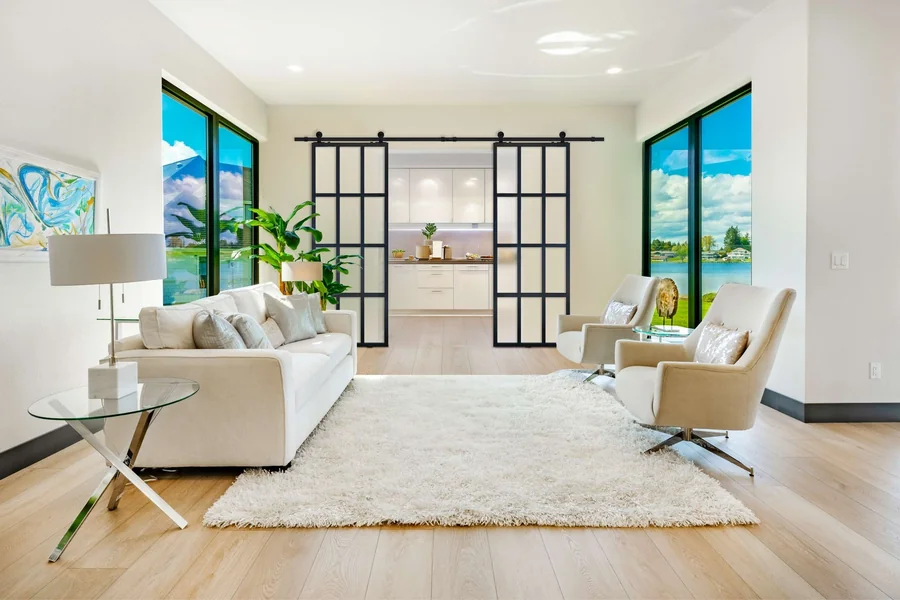
Let’s be honest: we all went through that phase a few years ago. You know the one. We collectively decided that everything needed to look like it was salvaged from a 19th-century dairy farm. We slapped shiplap on walls that didn’t ask for it, bought “vintage” milk jugs from Target, and installed chunky, wrought-iron barn door tracks that could probably support a Clydesdale.
But as with all love affairs, the honeymoon phase faded. We realized that while we loved the function of a sliding door (hello, extra floor space!), we didn’t necessarily want our modern city apartment to look like the set of Little House on the Prairie.
Enter the hero of our story: hidden barn door hardware.
If you’ve been scrolling through Pinterest or Instagram lately, you’ve likely seen doors that seem to magically float across the wall. No visible rails, no clunky wheels, just smooth, silent movement. It’s sleek, it’s sexy (yes, door hardware can be sexy), and it’s arguably the hottest trend in interior design right now.
Here is why this invisible magic trick is taking over our homes and why you might just want to join the club.
The “Magic” Behind the Curtain
What Exactly Is It?
Unlike traditional barn door setups where the track and rollers are mounted proudly above the doorway for all to see, hidden barn door hardware is designed to be, well… hidden.
The mechanics are usually tucked away behind the door itself. Often called “phantom” or “ghost” systems, the track is typically mounted to the back of the door panel, while the rollers are anchored to the wall. As the door moves, the hardware stays completely concealed, creating that gravity-defying, floating effect.
Why Designers Are Obsessed
Designers love clean lines the way cats love sunbeams. Traditional barn door hardware creates a lot of visual “noise.” You have the rail, the stoppers, the big rolling wheels—it’s a lot to look at. Hidden hardware erases all that clutter. It allows the door itself to be the artwork, rather than the brackets holding it up.
Top Reasons to Make the Switch
If you’re on the fence about upgrading your interior doors, here are a few compelling arguments to push you over the edge.
1. Minimalist Aesthetics for the Win
We are currently living in the era of “Japandi” and organic modernism. We want calm spaces. We want zen. We definitely don’t want industrial steel brackets screaming for attention in a serene master bedroom.
Hidden hardware offers a streamlined look that fits perfectly with contemporary, minimalist, or even mid-century modern homes. It takes the rustic “barn” out of the “barn door,” leaving you with just a sophisticated sliding panel.
2. Space Saving (Without the Swing)
We’ve all had that one awkward door in the hallway that hits the bathroom door if both are opened at the same time. It’s a traffic jam in your own home. Sliding doors solve this physics problem instantly. By gliding parallel to the wall, you reclaim the 10-14 square feet of floor space that a swinging door creates. Hidden hardware gives you this functionality without the heavy industrial look.
3. Silence is Golden
Have you ever rolled a traditional barn door? Rumble, rumble, rumble. It sounds like a skateboard on a cobblestone street.
Most high-quality hidden barn door hardware systems come equipped with high-tech rollers and soft-close mechanisms. They glide. They whisper. They gently brake before they hit the frame. It’s a level of refinement that feels incredibly luxurious every time you use it.
Where to Use Hidden Hardware in Your Home
This trend isn’t just for show; it’s incredibly practical for tricky spots in your house.
- The En-Suite Bathroom: A floating door here creates a seamless transition from bedroom to bath, maintaining privacy without a swinging door eating up space near the vanity.
- The Home Office: With remote work becoming the norm, we need flexible boundaries. A hidden sliding door can close off your workspace for a Zoom call and then disappear when it’s time to clock out.
- Kitchen Pantries: A standard pantry door is often left open, blocking walkways. A sliding panel stays out of the way, and with hidden hardware, it looks like a chic wall panel rather than a utility closet.
Is It Right For You?
Before you rush out to buy a kit, there are a few human realities to consider. This isn’t always a 15-minute DIY project you knock out before brunch.
Installation Quirks
Because the hardware is concealed, the installation requires a bit more precision than bolting a rail to a stud. You often need a specific door thickness, and you might need to route a channel into the bottom of the door for the floor guide. If the word “router” makes you nervous, you might want to call a handy friend or a professional.
Wall Prep
Your wall needs to be relatively flat. Since the door glides very close to the wall (to keep the “floating” illusion), a wall that bows or waves might cause the door to rub. It’s like trying to wear skinny jeans after Thanksgiving dinner—technically possible, but friction is inevitable.
The Verdict
The interior design world moves fast, but the shift toward hidden barn door hardware feels like it has staying power. It solves a functional problem (space) while meeting an aesthetic desire (minimalism) without compromising on quality.
It allows us to keep the sliding door concept we love, but lets us graduate from the “farmhouse chic” look into something more timeless and refined. So, go ahead—let your doors float.