
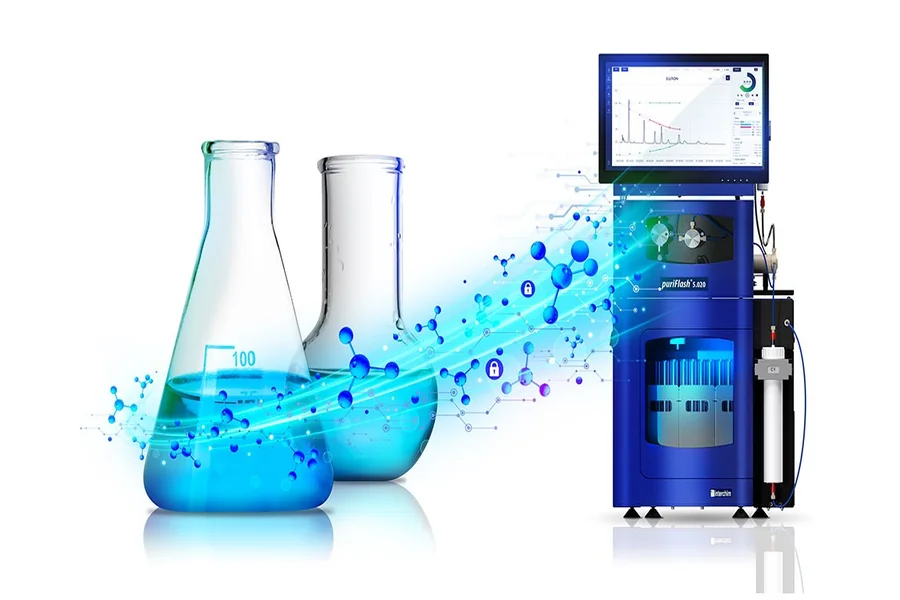
High-purity compounds are essential across scientific laboratories for research, development, and analytical applications. Flash purification chromatography delivers this purity efficiently, allowing laboratories to isolate and purify complex mixtures while preserving compound integrity. By significantly reducing turnaround time, this technique supports accurate, reliable results in fast-paced research environments.
How Flash Purification Chromatography Works
Flash purification chromatography solutions use a column packed with an adsorbent material, such as silica or polymer-based media. As a sample mixture moves through the column under controlled pressure, individual components travel at different rates based on their chemical properties and interactions with the stationary phase. This differential movement enables effective separation, and the purified compounds are collected for downstream use.
Advantages in Modern Laboratory Settings
One of the primary advantages of flash purification chromatography is speed. Separations that once took hours can now be completed in minutes, dramatically improving laboratory productivity. This efficiency supports faster project completion and higher sample throughput. Additionally, the technique is highly scalable, making it suitable for both small research samples and larger preparative needs.
Improved Reproducibility and Accuracy
Consistency is a cornerstone of scientific research. Flash purification chromatography enhances reproducibility through controlled operating conditions and automation. Standardized flow rates and solvent gradients reduce variability and minimize human error. As a result, researchers can trust their data and confidently build upon results in subsequent experiments.
Cost-Effectiveness and Resource Conservation
Budget constraints are a reality for many laboratories. Compared to traditional purification methods, flash purification chromatography uses smaller volumes of solvent, reducing operating costs and waste disposal expenses. Time savings further contribute to cost efficiency, allowing staff to focus on higher-value research activities.
Safety Enhancements
Laboratory safety is a critical concern. Automated flash chromatography systems reduce direct handling of hazardous solvents and reagents, minimizing the risk of spills, exposure, and accidents. Enclosed systems and standardized protocols help create a safer working environment, enabling staff to operate with greater confidence and focus.
Applications Across Multiple Fields
Flash purification chromatography is widely used across scientific disciplines. Pharmaceutical laboratories rely on it to isolate active ingredients and intermediates. Chemical research facilities use it to separate reaction products, while environmental laboratories apply it to analyze pollutants and contaminants. Its versatility makes it an indispensable tool wherever high-purity compounds are required.
Adapting to Evolving Laboratory Needs
Scientific research is constantly evolving, and laboratory methods must adapt accordingly. Flash purification chromatography offers flexibility through customizable adsorbents, solvent systems, and operating conditions. This adaptability allows laboratories to address both routine separations and novel challenges with minimal disruption to workflows.
Integration with Modern Technologies
Many modern laboratories rely on automation and digital systems. Flash purification chromatography integrates seamlessly with these technologies through automated sample loading, built-in detectors, and computerized control systems. Digital data capture and reporting simplify traceability, documentation, and regulatory compliance.
Training and Support for Laboratory Personnel
Proper training is essential for effective use of flash purification systems. Laboratories that invest in staff training benefit from smoother operation, faster troubleshooting, and more consistent results. Well-trained technicians can maximize system performance while minimizing errors and downtime.
Environmental Considerations
Sustainability is an increasing priority in scientific research. Flash purification chromatography supports greener laboratory practices by reducing solvent consumption and waste generation. Some systems even allow solvent recycling, further lowering environmental impact. These features enable laboratories to meet sustainability goals without compromising performance or accuracy.
Conclusion
Flash purification chromatography is a valuable solution for modern laboratories seeking speed, efficiency, and reliability. Its ability to deliver high-quality results across diverse applications makes it a cornerstone of contemporary laboratory workflows. As technology continues to advance, flash purification chromatography will remain a key driver of productivity, safety, and sustainable scientific progress.