
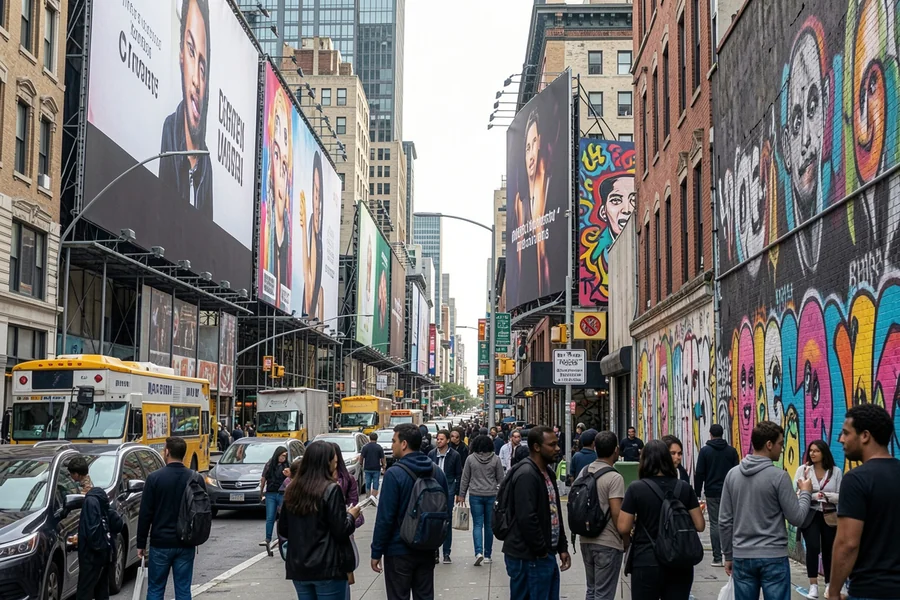
The relationship between architecture and visual media is undergoing a massive paradigm shift. For decades, urban design focused entirely on static materials—glass, steel, concrete, and stone. Buildings were designed to be permanent, unyielding monuments to a specific moment in time.
Today, the lines between physical structures and digital art have completely blurred. The modern metropolis is no longer just a collection of functional buildings; it has evolved into a dynamic, living canvas.
Through the integration of cutting-edge LED technology, real-time data streaming, and programmatic visual curation, contemporary architecture is shedding its static nature. Across the globe, high-profile physical spaces are proving that digital installations are not mere distractions—they are a new form of high-impact structural design that dictates how we experience urban spaces.
Designing with Light: The Architectural Digital Monument
In the realm of modern design, integrating scale with structural aesthetics requires a deep understanding of spatial psychology. Large-scale digital screens are no longer just mounted onto walls as an afterthought; they are engineered into the very skeleton of the building.
A masterclass in this architectural integration can be seen in the design of the Nasdaq billboard. Towering over its surroundings, this iconic seven-story cylindrical LED display wraps perfectly around the facade of the Conde Nast building. From a design perspective, it transforms a traditional corner intersection into a futuristic pillar of light. The seamless curvature of the screen challenges standard flat-surface media layouts, forcing digital artists and creators to rethink composition, perspective, and motion to harmonize with the building’s physical geometry.
The Transformation of the Urban Landscape
When scale and illumination are deployed across an entire district, the physical environment undergoes a total cultural metamorphosis. A space designed around dynamic light shifts from a simple transit zone into an immersive public theater.
Nowhere is this design philosophy more evident than New York’s central commercial hub. Standing before a Times Square billboard, you immediately realize that the media installations are not merely placed on the buildings—they are the buildings. The massive, high-definition digital canvases define the canyon-like architecture of the area, creating a simulated sky of vibrant color and fluid motion. For designers, architects, and brands, this environment demands a unique approach to scale. Visuals must be crafted to compete with ambient city light and complex pedestrian flows, turning massive digital art installations into the defining landmarks of the city’s modern identity.
The Spatial Psychology of Monumental Displays
Why do these immense digital installations captivate human attention so much more effectively than standard digital media? The answer lies in the concept of forced perspective and architectural scale.
Human beings are naturally conditioned to look up when confronting monumental structures—a psychological remnant of our relationship with ancient architecture and natural wonders. When a digital display utilizes forced perspective, 3D anamorphic art, or hyper-realistic textures at a massive scale, it triggers a profound sensory reaction. The viewer isn’t just looking at a screen; they are experiencing an altered physical environment. This psychological gravity grants digital installations an unparalleled level of prestige and memorability, elevating the content from a transient message to a structural event.
Blending Interactive Art with Public Environments
The true future of urban design lies in responsive architecture—spaces that react and adapt to the life moving through them. Modern large-scale displays are no longer passive loops of pre-rendered video; they are increasingly driven by live data feeds, weather patterns, and public interactions.
When a digital canvas changes its color palette based on the setting sun, or morphs its abstract patterns in response to local traffic flow, it bridges the gap between technology and human experience. These installations give multi-story buildings a digital pulse, allowing them to communicate with the city in real time. For forward-thinking brands and creators, this offers an unprecedented opportunity to anchor digital narratives within a physical landmark, creating an unforgettable multi-sensory experience that extends far beyond the pavement below.
The Horizons of Future Design
As we look toward the future of smart cities and experiential architecture, the integration of massive digital mediums into our physical infrastructure will only deepen. The most influential designs of tomorrow will not be defined by the rigidity of their materials, but by the fluidity of their expressions. By treating the surfaces of our grandest buildings as evolving digital canvases, modern creators are not just changing how we look at architecture—they are reshaping the visual horizon of humanity itself.